The Night Noah Discovered the Secret of unicorns
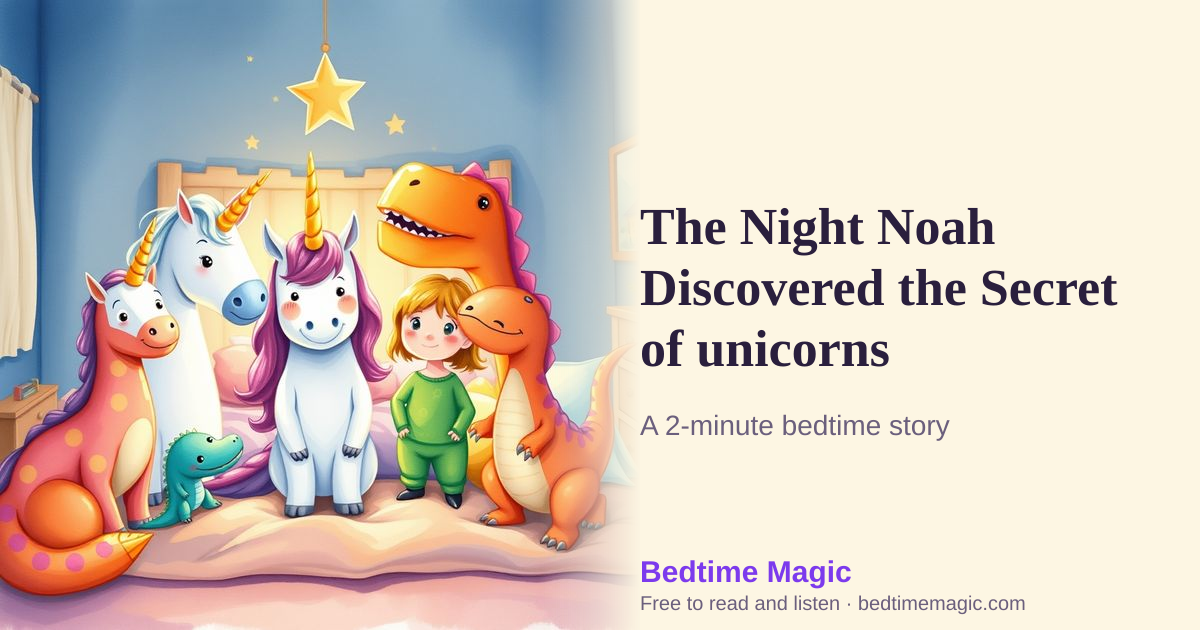
Noah was the kind of kid who asked "why?" about everything. Why is the sky blue? Why do cats purr? Why does pizza taste so good? Most adults would eventually say, "Because it just does," but Noah's Aunt Noor — a scientist with wild curly hair and paint-stained lab coats — always had a real answer.
One starry night, Aunt Noor arrived with a telescope, a notebook, and a thermos of hot cocoa. "Tonight," she announced, "we investigate unicorns." Noah's eyes went wide with excitement.
They set up the telescope in the backyard and peered into the night sky. Aunt Noor explained how everything in the universe is connected — from the atoms in their fingertips to the dust of distant nebulae. "You are literally made of star stuff," she said, and Noah felt a shiver of wonder run down their spine.
Together, they sketched constellations, measured the moon's position, and recorded the temperature every thirty minutes in the notebook. Noah noticed that the crickets chirped faster when it was warmer. "That's called Dolbear's Law!" Aunt Noor exclaimed, delighted. "You just made a scientific observation!"
As the night deepened and Noah's eyelids grew heavy, they asked one final question: "Aunt Noor, will we ever know everything?" She smiled, pulling the blanket up to Noah's chin. "I hope not," she said. "Because the best part of science isn't knowing — it's wondering." And with that, Noah drifted off to sleep, dreaming of stars and crickets and the infinite, beautiful mystery of unicorns.