Ezra's Different Kind of Smart
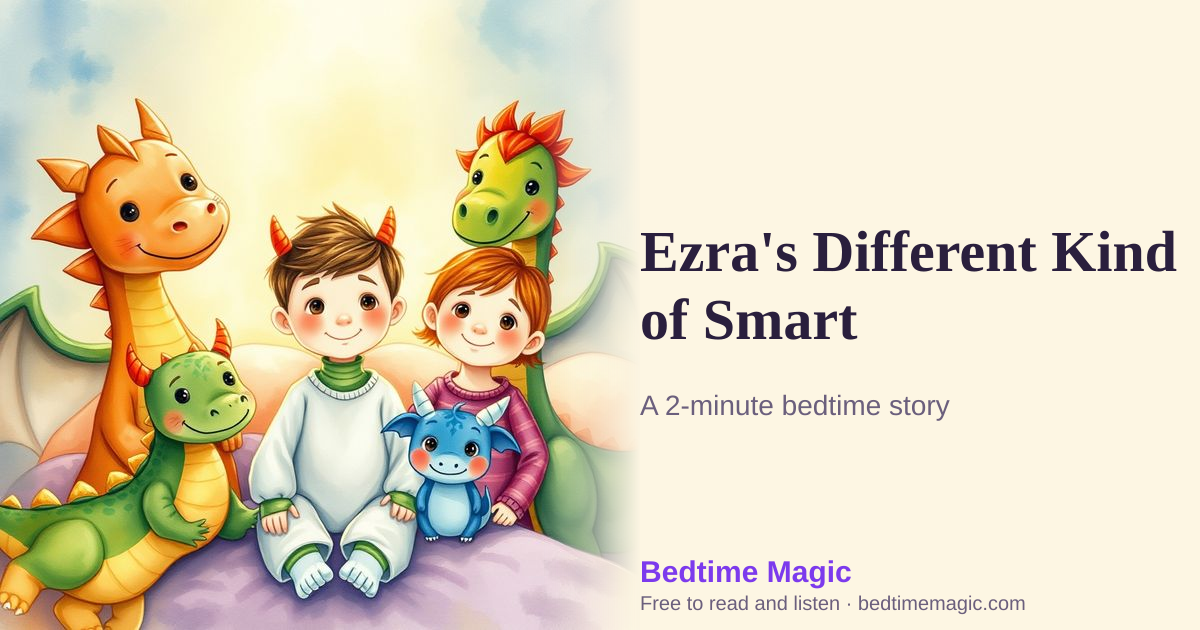
The letters wouldn't stay still. Every time Ezra tried to read, the words on the page wiggled and rearranged themselves, like ants refusing to walk in a line. While other kids read chapter books, Ezra struggled with picture books. While other kids finished tests early, Ezra was still on question three when the timer buzzed.
"I'm stupid," Ezra told Mom one night, face buried in the pillow. Mom sat down, rubbed Ezra's back, and said the thing that changed everything: "You're not stupid. Your brain works differently. And different isn't less — it's just different."
Ezra started working with Mrs. Okafor, a reading specialist who used colored overlays, audiobooks, and something called multisensory learning. It was hard. Some days, Ezra wanted to throw the book across the room. But Mrs. Okafor would say, "Your brain is like a muscle. The more you exercise it, the stronger it gets. But everyone's workout is different."
Slowly — so slowly it was almost invisible — things changed. The letters stopped wiggling as much. The words started making sense. Ezra finished a whole chapter by themselves for the first time and ran through the house waving the book like a flag.
But the real breakthrough came at the end-of-year assembly, when Ezra stood on stage and read a poem they had written. Their voice shook. Their hands trembled. They mispronounced one word and had to start over. And the audience didn't care — they gave Ezra the loudest, longest standing ovation of the day. Not out of pity. Out of respect.
Because everyone in that room knew what it had taken for Ezra to stand there. And that kind of courage — the kind that says "this is hard for me, and I'm doing it anyway" — is the bravest kind there is.