Layla and the Friend Only They Could See
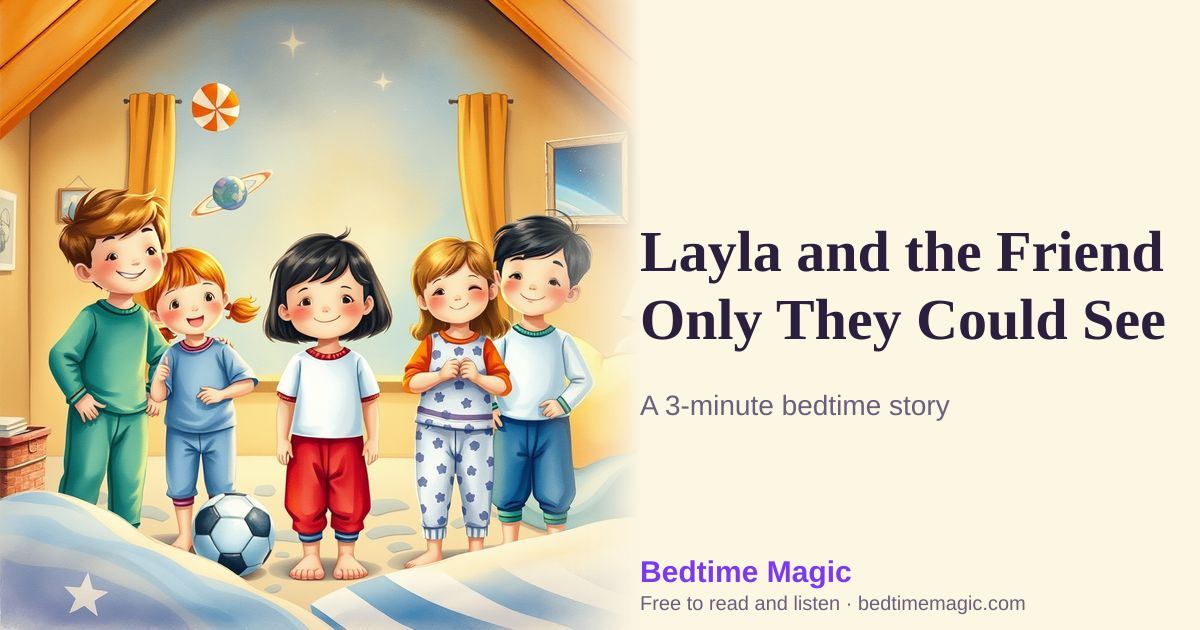
Zip had been Layla's best friend since age three — invisible to everyone else but as real as rain to Layla. Zip was seven inches tall, had blue hair, and lived in Layla's shirt pocket. They had conversations during class, adventures during recess, and philosophical debates during bath time.
"You know I'm not real, right?" Zip said one Tuesday afternoon. Layla was ten now, and this question had been floating in the air for months. "You're real to me," Layla said firmly. But something had shifted. The other kids had stopped talking about their imaginary friends years ago.
"Are you going to disappear?" Layla asked that night, lying in bed. Zip sat on the pillow, legs crossed, smaller than usual. "Not disappear. Change. I'm becoming something else — the voice inside you that reminds you to be brave, to be kind, to ask 'what if?' I've always been that voice. I just had blue hair for a while."
Layla's eyes filled with tears. "But I don't want you to change. I want you to stay the same forever." Zip smiled — a smile that was warm and wise and a little bit sad. "Nothing stays the same, kiddo. That's not a tragedy. That's how growing works."
The next morning, Zip was gone. No blue hair, no tiny voice from the pocket. Layla felt the absence like a missing tooth — a gap where something familiar used to be.
But then, during a math test, Layla got stuck on a problem and heard a whisper: "You've got this. Think it through." And at lunch, when a younger kid sat alone, something nudged Layla to walk over and sit down. And at night, lying in bed, Layla felt a warmth that was as real as any friend — the warmth of knowing that the best parts of Zip had never left at all. They'd just moved from the pocket to the heart.